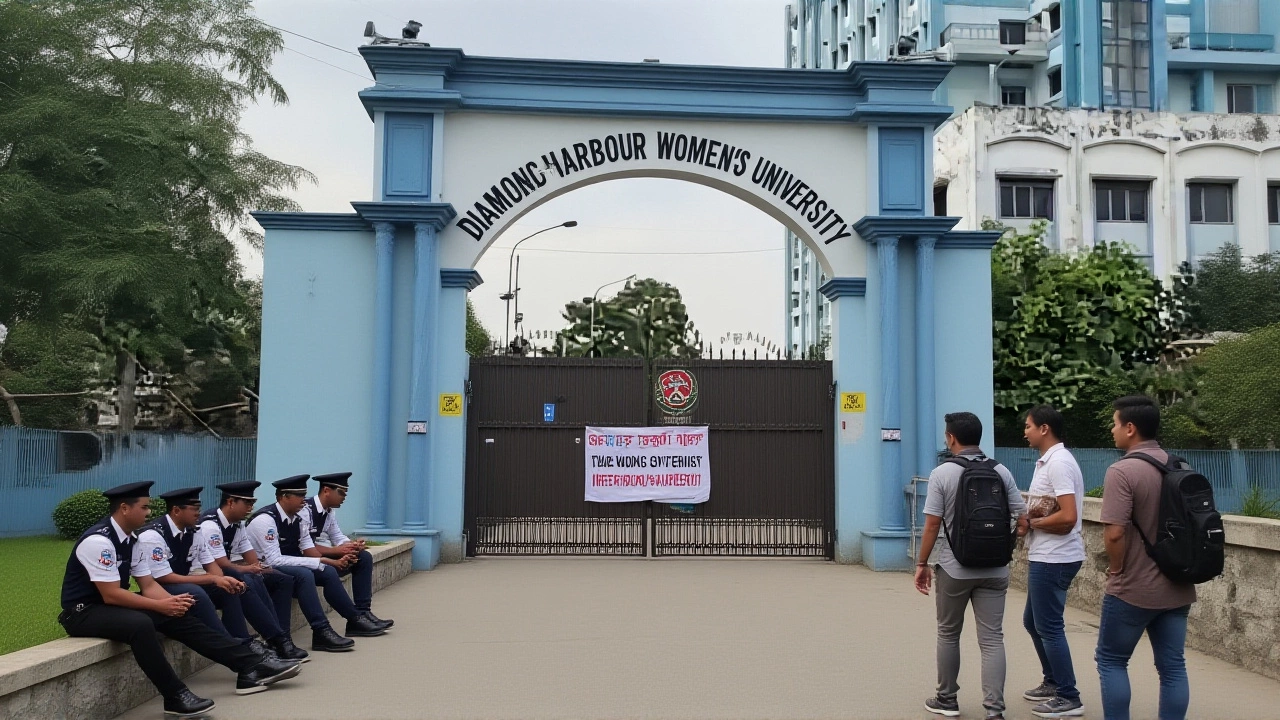
When Debangshu Panda, candidate for the Bharatiya Janata Party (BJP), announced his victory in Falta, the political landscape of West Bengal shifted dramatically. It wasn't just a win; it was a landslide that sent shockwaves through the state’s traditional power structures.
The results came in on May 2026, following a repoll ordered after allegations of irregularities. Panda defeated his closest rival, Shambhu Nath Kurmi of the Communist Party of India (Marxist) [CPI(M)], by a staggering margin of 1,09,021 votes. This isn't your typical close contest where every ballot counts—it’s a mandate that redefines the seat’s identity.
Here’s the thing: Falta has long been considered a stronghold for left-wing parties and, more recently, the ruling Trinamool Congress (TMC). To see the BJP not only compete but dominate with such a wide gap is unprecedented. The voting turnout was remarkably high too—86.11% by 5 PM on election day, according to the Chief Electoral Officer. That kind of engagement suggests voters weren’t just showing up out of habit; they were making a statement.
A Historic Shift in South 24 Parganas
Falta Assembly Seat (No. 144) falls under the Diamond Harbour parliamentary constituency in the South 24 Parganas district. Historically, this area leaned heavily toward the CPI(M), with occasional challenges from the Indian National Congress. In the 2021 elections, TMC’s Sankar Kumar Naskar won with 1,17,179 votes—a 56.4% share—defeating BJP’s Bidhan Parui by nearly 40,000 votes.
Fast forward to 2026, and the script has flipped entirely. Early count data showed Panda securing around 111,270 votes initially, representing roughly 68.57% of the counted ballots at one stage. Later reports from ABP Live indicated his total climbed to 1,49,666 votes. Meanwhile, Kurmi trailed with 34,873 votes, placing him second. Congress candidate Abdul Razzak Molla managed only 9,284 votes, finishing third.
The real story, however, lies in what happened to the incumbent party. TMC’s candidate, Jahangir Khan, slumped to fourth place. In fact, he was so far behind that his security deposit was likely forfeited. For a party led by Mamata Banerjee to lose its ground in a constituency it once called home is significant. As one local observer put it, "The saffron storm didn’t just blow through; it dismantled the fortress."
The Repoll Controversy and Voter Sentiment
This election wasn’t straightforward. Allegations of malpractice triggered a repoll on May 21 across several booths in Falta. One particular booth in the Muslim-majority 'Muslim Para' became a flashpoint when initial counts suggested the BJP received 97% of the vote there. TMC questioned the credibility of the process, citing demographic anomalies.
Despite these controversies, the repoll itself was peaceful. No major incidents of violence or tension were reported, which is notable given the charged atmosphere. The Election Commission of India (ECI) maintained strict oversight, displaying round-wise counting data on its official website. Officials emphasized that final results would be formalized via Form 20, ensuring transparency despite the earlier doubts.
Turns out, the high voter turnout wasn’t just about curiosity. With petrol prices in New Delhi hovering around ₹94.77 per litre and diesel at ₹87.67 during this period, economic factors may have influenced voter behavior nationwide, including in rural pockets like Falta. While direct causation is hard to prove, the context matters. Voters are increasingly pragmatic, weighing performance over ideology.
What This Means for West Bengal Politics
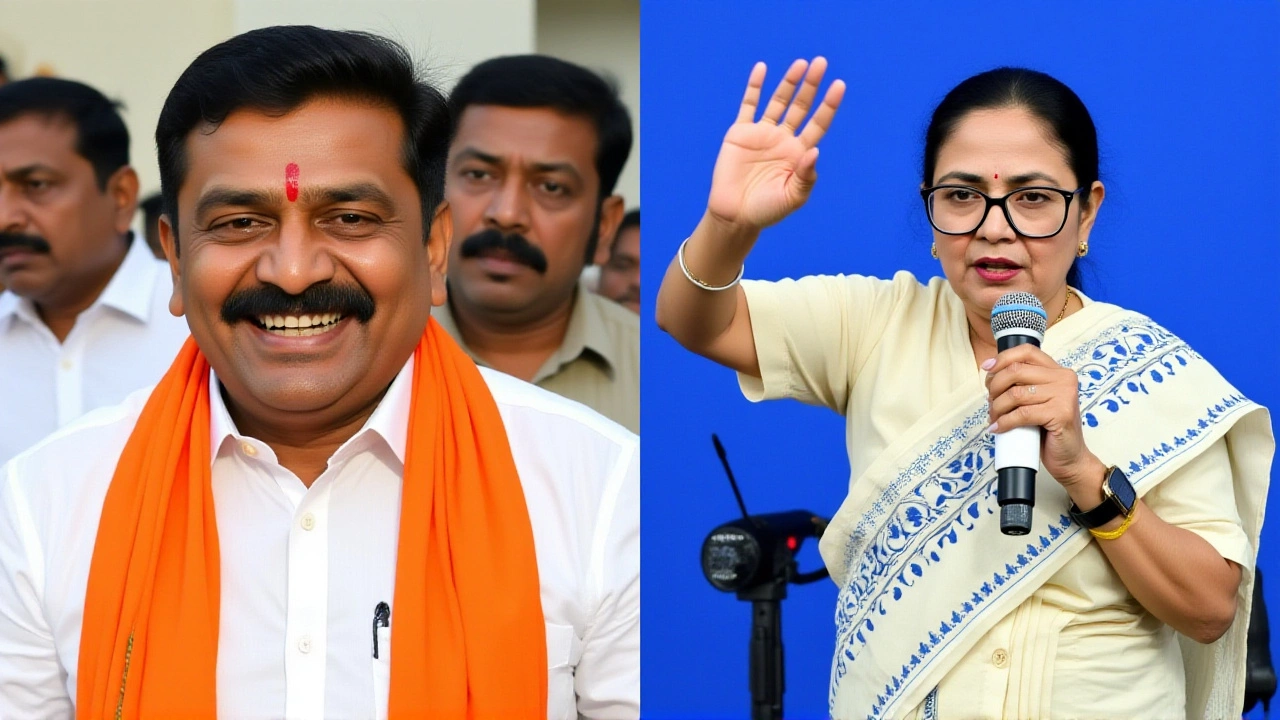
For the BJP, this is more than a numerical victory. It’s symbolic. Winning by over a lakh votes in a historically non-BJP territory signals growing acceptance among diverse demographics. If similar trends emerge in other constituencies, the balance of power in West Bengal could shift significantly in upcoming polls.
For the CPI(M) and TMC, it’s a wake-up call. Both parties have relied on entrenched support bases, but Falta shows those foundations are cracking. Kurmi’s loss highlights the decline of communist influence, while Khan’s poor showing underscores TMC’s vulnerability even in its core areas.
Experts suggest this result reflects broader national trends where regional parties face stiff competition from the BJP’s organized machinery. As one analyst noted, "It’s not just about leadership anymore; it’s about delivery. And in Falta, the message was clear."

Looking Ahead: Next Steps and Implications
The ECI will release the final certified results shortly, but the direction is already evident. Political strategists are now analyzing whether this model can be replicated elsewhere. Can the BJP sustain this momentum? Will opposition parties adapt their strategies?
Meanwhile, locals in Falta are waiting to see how this translates into governance. A new MLA means new priorities—infrastructure, employment, and social welfare will likely take center stage. For now, the celebration continues, but the work begins soon.
Frequently Asked Questions
Why was a repoll held in Falta?
A repoll was conducted on May 21 due to allegations of electoral malpractice at certain polling stations. Specific concerns arose after unusually high vote shares for one party in demographically mixed areas, prompting the Election Commission to ensure a fair recount.
Who were the main candidates in the Falta by-election?
The key contenders were Debangshu Panda (BJP), Shambhu Nath Kurmi (CPI(M)), Abdul Razzak Molla (Congress), and Jahangir Khan (TMC). Panda emerged victorious with a massive majority, while Khan finished last, risking his security deposit.
How does this result compare to the 2021 election?
In 2021, TMC’s Sankar Kumar Naskar won with 1,17,179 votes, defeating BJP’s Bidhan Parui by nearly 40,000 votes. The 2026 outcome represents a complete reversal, with BJP gaining over a lakh votes and TMC dropping to fourth place, indicating a major swing in voter preference.
What was the voter turnout in the Falta by-poll?
Voter participation was exceptionally high, reaching 86.11% by 5 PM on election day. This level of engagement suggests strong public interest and possibly dissatisfaction with the status quo, driving citizens to cast their ballots decisively.
Is Falta traditionally a BJP stronghold?
No, Falta has historically been dominated by the CPI(M) and later the TMC. The BJP’s historic win here marks a significant breakthrough, challenging long-standing political alliances and demonstrating the party’s expanding reach in rural West Bengal.